






 Customer Dispute Resolution Page
 Help Center
 Affiliate Program
In this article
Welcome to WPT Global
Welcome to WPT Global, the online home of the World Poker Tour®. Let us guide you through setting up your account and get you to the tables in no time.Social Media


How To Play
World Leading Tournaments
A huge player pool and everything from freerolls to high rollers – plus regular special events!Ambassadors
Get to know our ambassadors - world-class players from across the globe who embody the spirit of the game. Discover their stories and become part of the community.Your Hub for News
Explore stories, tips, and updates from the world of poker and casino. Learn from pros, discover new trends, and stay in the loop with everything happening at WPTGlobal.What are you looking for?
Close




How to Play Irish Poker: Game Rules & Strategy
Share




Key Takeaways
Irish Poker is a hybrid game that combines elements of Texas Hold’em and Omaha.
Players are dealt four cards but must discard two after the flop.
The game creates more action and bigger pots than standard Hold’em.
Strategy revolves around strong starting hands, flexibility, and post-flop decision-making.
A popular variation includes the Irish poker drinking game, often featuring “Ride the Bus.”
Irish Poker is one of those formats that sits right in the sweet spot between structure and chaos. It blends the familiarity of Texas Hold 'em with the complexity of Omaha, creating a game that is easy to learn but surprisingly deep once you start playing regularly.
At first glance, it feels like Hold’em with extra cards. In reality, those extra cards completely change how hands develop. More combinations, more draws, and more difficult decisions.
Whether you are playing casually with friends or exploring new formats within poker games, understanding how to play Irish poker properly will give you a clear edge.
Origins of the Irish Poker Card Game
Irish Poker does not have a single documented origin like some traditional poker variants. Instead, it is widely believed to have emerged as a home game adaptation, combining popular mechanics from existing formats.
Players wanted:
The simplicity of Hold’em
The action and draw potential of Omaha
The result was Irish Poker, a game that quickly gained traction in home games and informal settings due to its fast pace and unpredictability.
Over time, it has become a staple variation among players looking to mix things up without learning an entirely new rule set.
How To Play Irish Poker (Step-by-Step)
The structure of Irish Poker follows familiar poker rules, with one key twist.
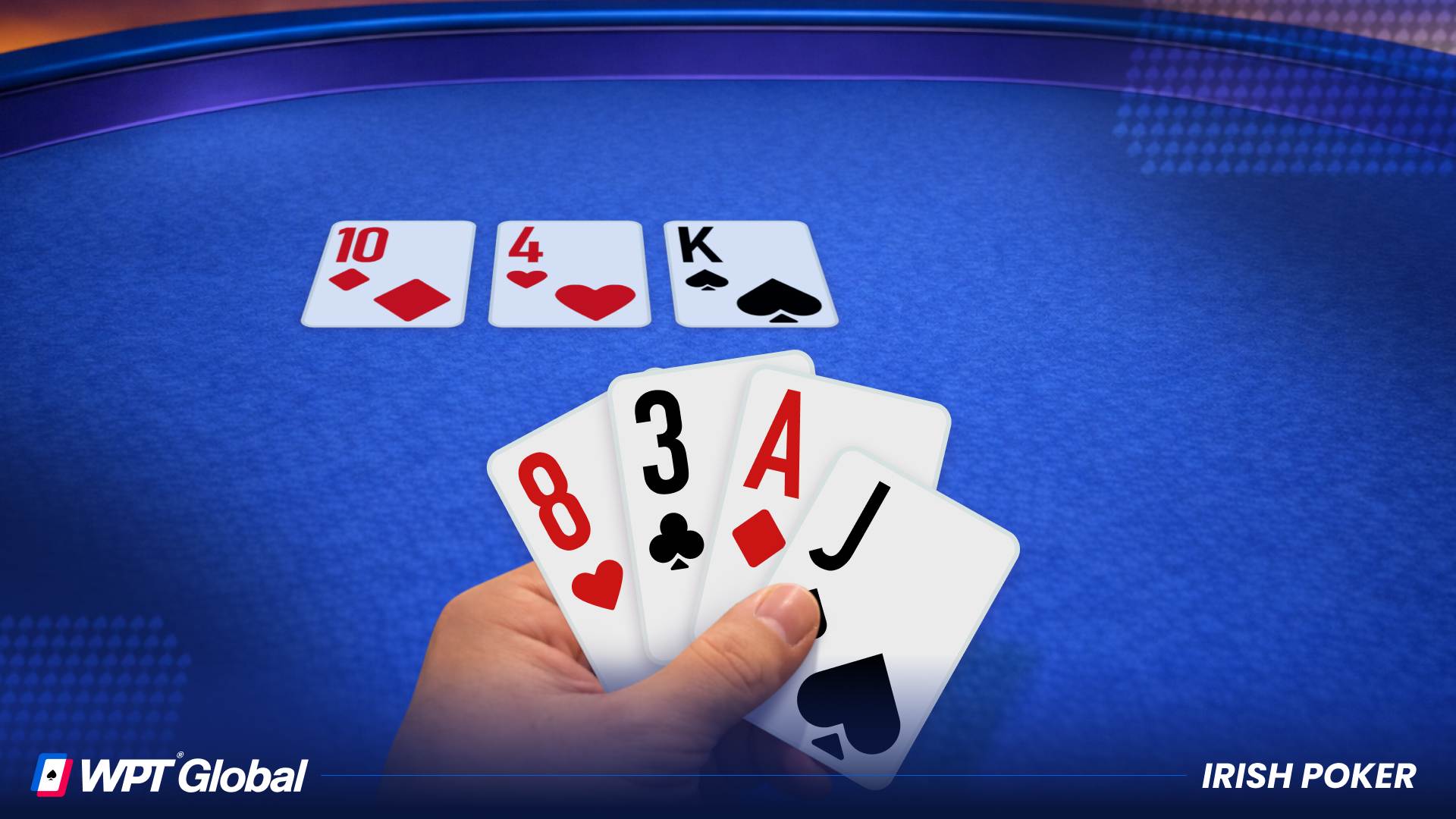
Step 1. Each Player Receives Four Cards
Just like Omaha, every player starts with four hole cards. This increases the number of possible combinations and gives players more flexibility, but it also makes early hand selection more complex.
Step 2. Preflop Betting Round
Players act as they would in Hold’em, deciding whether to fold, call, or raise. Because everyone holds four cards, ranges are generally stronger, so standard Hold’em assumptions about hand strength need to be adjusted.
Step 3. The Flop Is Dealt
Three community cards are placed face-up. At this stage, players begin evaluating how their four-card hand connects with the board, often considering multiple potential directions.
Step 4. Players Discard Two Cards
This is the defining feature of Irish Poker. After the flop, each player must choose two of their four cards to keep and discard the other two. This decision is highly strategic, as it forces you to commit to either made hands or drawing potential. Choosing incorrectly can leave you with a weak or inflexible hand for the rest of the round.
Step 5. Turn and River Are Dealt
The remaining community cards are revealed. From this point on, the game plays like Texas Hold’em, but your earlier discard decision heavily influences how strong your final hand can become.
Step 6. Showdown
Players use their remaining two hole cards and three community cards to make the best five-card hand. Because of the discard phase, hands tend to be more defined by the river, and strong combinations appear more frequently.
This discard phase creates a unique dynamic. You are constantly balancing potential draws with made hands, and decisions made on the flop often determine the outcome of the hand.
Irish Poker Hand Rankings
Irish Poker uses standard poker hand rankings.
From strongest to weakest:
Rank | Hand |
|---|---|
1. | Royal Flush |
2. | Straight Flush |
3. | Four of a Kind |
4. | Full House |
5. | Flush |
6. | Straight |
7. | Three of a Kind |
8. | Two Pair |
9. | One Pair |
10. | High Card |
Even though the rankings are the same as Hold’em, hand strength shifts slightly because players start with more cards. Strong hands occur more frequently, and weaker holdings lose value faster.
Irish Poker Strategy & Tips
Irish Poker rewards players who can adapt quickly after the flop.
Be Selective With Starting Hands
Four cards create the illusion that every hand is playable. It is not.
Look for:
Connected cards
Suited combinations
Hands that can make strong draws
Hands like A♠ K♠ Q♦ J♦ are far more valuable than disconnected holdings.
Plan Your Discard Before the Flop
Strong players already have a plan.
Ask yourself:
Which two cards am I likely to keep?
What flops benefit my hand?
This prevents rushed decisions when the flop is revealed.
Prioritize Nut Potential
Because players start with four cards, second-best hands are dangerous.
Focus on hands that can make:
Nut straights
Nut flushes
This concept is similar to advanced thinking in poker strategy.
Adapt Quickly After the Flop
The discard phase changes everything.
Commit to strong draws
Let go of marginal hands
Avoid chasing weak combinations
Aggression Still Wins Pots
Even with more cards in play, betting pressure remains powerful.
Well-timed aggression can force opponents to fold even when they have decent equity.
Irish Poker Variants
Irish Poker is flexible and often adapted to suit the group playing, with different formats changing both the pace of the game and the level of strategic depth.
Pot Limit Irish Poker
In this format, players can only bet up to the current size of the pot. This creates a more controlled environment where bet sizing matters and players are less likely to commit their entire stack in a single hand. It encourages more post-flop play and rewards players who can manage pot size effectively.
No Limit Irish Poker
No Limit allows players to bet any amount of their stack at any time. This increases volatility and creates more pressure situations, especially after the discard phase. Players must balance aggression with hand strength, as mistakes can be much more costly.
Dealer’s Choice Formats
In dealer’s choice games, the dealer selects the variant for each round, which may include Irish Poker among other formats. This introduces variety and forces players to adapt quickly to different rules and structures, making flexibility and game awareness important.
Some games also adjust discard rules or betting structures, such as changing when players must discard their extra cards or modifying betting limits. These changes can significantly impact strategy, as they alter how much information players have and how aggressively they can play.
These variations are most commonly found in casual or mixed-game environments, where the focus is often on variety and enjoyment, but they still reward players who can quickly adjust their approach.
How To Play the Irish Poker Drinking Game
The Irish poker drinking game is a social variation that focuses more on entertainment than strategy, built around a series of simple prediction-based steps that gradually increase in difficulty.
Players begin by guessing the color of the next card, followed by whether the next card will be higher or lower than the previous one. The third step involves predicting whether the next card will fall inside or outside the range of the first two cards, and finally, players guess the suit of the last card. Each incorrect guess typically results in taking a drink, which adds to the pace and energy of the game.
The final stage is known as “Ride the Bus,” where the game shifts into a more structured challenge. A pyramid of cards is laid out on the table, and players must continue making correct guesses to progress through each level. As the pyramid narrows, the difficulty increases, and incorrect answers result in additional drinks.
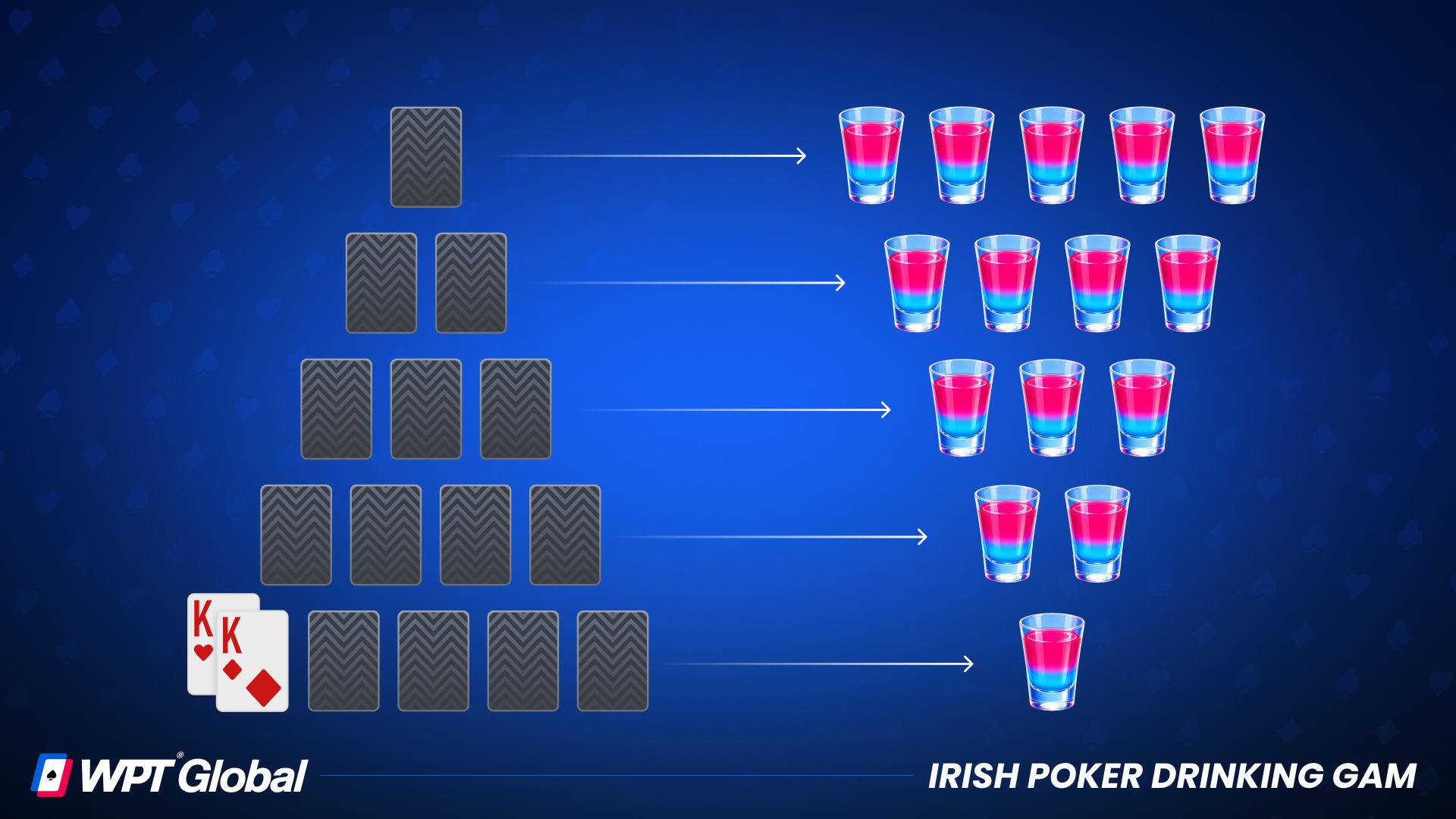
This version of Irish Poker is more about fun and group interaction than traditional poker skill.



Promotions
For Customers
Safety & Security
Stay Connected
Follow us on social media to stay updated with the latest news, updates, and exclusive offers!


Promotions
For Customers
Safety & Security
Stay Connected
Follow us on social media to stay updated with the latest news, updates, and exclusive offers!
 Local Payment Methods
 Cards
 Crypto
 E-Wallets
 Apple Pay
 Google Pay
 Instant Bank Payments
*
Some methods may not be available in your region. Please contact support if you experience any issues.
This website is operated by Everstronglink Limited a company incorporated under the laws of Costa Rica having its registered address at Province 01 San Jose, Canton 02 Escazu, San Rafael, On La Ceiba Street, House No. 400, Costa Rica, and is licensed by the Tobique Gaming Commission under License Number 0000005. Kashxa Limited, a Cyprus company with registration number 427606, having its registered office at Strovolou, 12 Aigyptou, Nicosia, 1097, Cyprus, is acting as a payment agent on behalf of the license holder entity Everstronglink Limited.
Gambling can be addictive. Play responsibly. Everstronglink Limited only accepts customers over 18 years of age.
Copyright © 2026 WPT Global. All rights reserved